
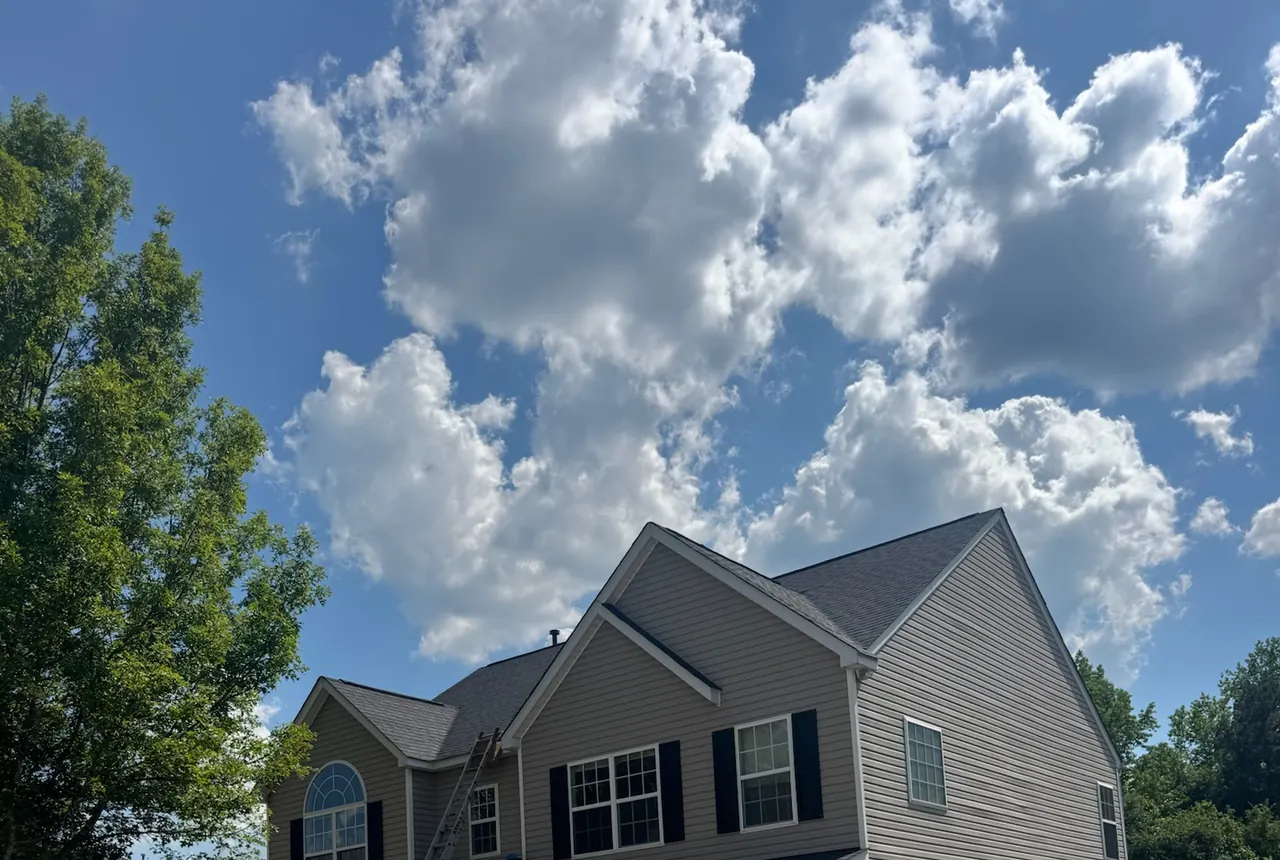
Why original roofs are aging out now
Builder-grade 3-tab shingles were often chosen to meet a budget and schedule. After years of summer heat, wind, and the Charlotte-metro hail corridor, seal strips weaken, asphalt dries, and granules thin. The roof may still look acceptable from the street while its margin for the next storm has narrowed.
That does not mean every 2004 roof automatically needs replacement. It means age should trigger an informed inspection. We check multiple slopes, penetrations, ventilation, flashing, decking clues, and repair history before recommending a full installation.
A complete roof installation system
A dependable new roof is a sequence of connected layers. Tear-off exposes the deck. Damaged wood is identified. Water protection is placed where the design needs it. Underlayment, starter, field shingles, flashing, ridge ventilation, and caps are then installed as one system.
- Protection for landscaping, siding, windows, and driveways
- Full tear-off unless an approved scope says otherwise
- Deck inspection with change approval before extra work
- Synthetic underlayment and targeted water barrier
- Flashing and ventilation details documented in photos
- Magnetic cleanup and final walk-through
Roof replacement cost without guesswork
We do not publish an invented one-size-fits-all price. Roof size is only one variable. Pitch, stories, access, waste, valleys, dormers, decking, flashing, ventilation, and material selection all affect the final scope. An aerial estimate can be useful, but a physical inspection prevents avoidable surprises.
Your proposal should state the material system, quantities or allowances, warranty terms, decking process, cleanup, and what happens if hidden damage appears. Compare scopes line by line, not only the bottom number.
A clear next step
Start with the roof you already have.
Bundle gutters only when it makes sense
Roof replacement is the cleanest time to evaluate gutters, drip edge, and fascia because the roof perimeter is already open. If gutters are properly pitched and sound, they may remain. If they overflow, pull away, or hide rotted fascia, combining the work can reduce duplication and protect the new roof edge.
Repair first when the roof still has life
We are comfortable telling a homeowner that a new roof is not needed yet. Isolated wind damage, a failed boot, or one flashing detail can often be repaired. If a repair can deliver dependable service without wasting money, we say so and document what to monitor.
Straight answers
Frequently asked questions
How much does a roof replacement cost in Indian Trail, NC?+
A reliable roof replacement price requires the roof dimensions, pitch, access, material choice, flashing details, and decking condition. Online averages often omit essential scope. We inspect the property and provide a written system-level proposal so the number reflects the actual home rather than a generic square-foot estimate.
How long does a roof replacement take?+
Many straightforward residential replacements are completed in one to several working days, but weather, roof complexity, decking repairs, and inspections can extend the schedule. Before work begins, we explain the expected sequence, daily protection plan, delivery timing, and how unexpected deck damage will be handled.
How long do builder-grade shingles last?+
Builder-grade 3-tab shingles often provide about 18 to 22 years of practical service in this climate, though installation, ventilation, sun exposure, and storms can shorten or extend that range. Indian Trail’s 2004 median build year is why original roofs deserve attention now.
Should I replace my gutters with my roof?+
Replace gutters with the roof when they are leaking, poorly pitched, undersized, pulling away, or covering damaged fascia. Sound gutters can often stay. Coordinating both projects can improve drip-edge integration and reduce duplicated setup, but bundling work is useful only when the gutter condition supports it.
Can I repair my roof instead of replacing it?+
Yes, when damage is limited and the surrounding roof still has useful service life. We compare the repair area with overall age, brittleness, granule loss, leak history, and expected remaining life. The goal is the least invasive option that can still be defended as durable.